

Booking a summer camp can feel exciting, but also a little overwhelming. There are so many options, promises, and glossy photos that make every program look perfect. Parents often end up choosing based on location, price, or convenience, but summer camp is a big experience for a child. The right camp can boost confidence, independence, and friendships. The wrong one can leave kids feeling bored, anxious, or disconnected.
The best way to feel confident in your choice is to ask the right questions before you register. When you know what to look for, you can move beyond marketing and truly understand how a camp operates and whether it fits your child’s needs.
Let’s walk through the most important questions every parent should ask before booking a summer camp.
1. What is the camp’s main focus and philosophy?
Every camp has a personality. Some focus heavily on sports, others on arts, academics, outdoor adventure, or leadership. Ask how the camp defines its mission and what skills or experiences they want children to gain. A camp that prioritizes teamwork and personal growth may look very different from one focused on competition or performance.
2. What ages is the camp designed for?
Age grouping matters more than many parents realize. Kids thrive when they’re surrounded by peers at a similar developmental stage. Ask how campers are grouped and whether activities are adapted for different age ranges. A program designed for teens will feel very different from one for younger children.
3. What does a typical day actually look like?
Instead of asking for a schedule alone, ask the camp to walk you through a real day. How much time is spent indoors vs. outdoors? Are there breaks? Is the day structured or flexible? Understanding the rhythm of the day helps you picture your child’s experience more clearly.
4. What is the staff-to-camper ratio?
This question is one of the most important for safety and supervision. Smaller ratios usually mean more attention, better support, and safer environments. Ask how many campers each counsellor supervises and whether ratios change for different activities like swimming or field trips.
5. How are staff hired and trained?
Great camps invest heavily in their staff. Ask about training, background checks, certifications, and experience. You can also ask how long staff typically stay with the camp. High staff retention often signals a strong and supportive environment.
6. How does the camp handle safety and emergencies?
Parents should never feel shy about asking safety questions. Find out how the camp manages injuries, allergies, heat safety, and emergency situations. Ask if staff are trained in first aid and CPR, and how parents are contacted if something happens.
7. What is the camp’s approach to inclusion and belonging?
Every child deserves to feel welcome. Ask how the camp supports children with different learning styles, abilities, or social comfort levels. Do they adapt activities? Do they offer additional support if a child feels overwhelmed or homesick?
8. How does the camp handle behaviour and conflict?
Kids are learning social skills, and disagreements happen. Ask how staff manage conflicts, bullying, or behaviour challenges. Camps that focus on teaching communication and problem-solving tend to create more positive environments.
9. What is the balance between structure and choice?
Some children love a structured schedule, while others thrive with flexibility. Ask how much choice campers have in activities. Camps that offer some choice often help kids feel more independent and engaged.
10. What happens if my child feels nervous or homesick?
Even day camps can feel overwhelming at first. Ask how staff support children who feel anxious or unsure. Knowing there’s a plan for emotional support can bring peace of mind to both parents and kids.
11. How does the camp communicate with parents?
Clear communication builds trust. Ask how the camp shares updates, reminders, and important information. Do they send newsletters, emails, or daily summaries? Will you receive updates if there’s a schedule change?
12. What is included in the camp fees?
Camp pricing can vary widely, and surprises are never fun. Ask what’s included and what costs extra. Some camps include supplies, snacks, or trips, while others charge additional fees. Understanding the full cost upfront helps avoid stress later.
13. What should my child bring each day?
Knowing what to pack helps your child feel prepared and comfortable. Ask about clothing, equipment, lunches, and weather considerations. Camps that provide detailed packing guidance often run more smoothly.
14. How does the camp measure success?
This question often reveals a lot. Some camps focus on skill development, others on friendships, confidence, or fun. Hearing how they define a successful summer can help you decide if their goals match yours.
15. Why do families return to this camp year after year?
This is a great closing question when speaking to camp staff. Their answer will often highlight what they believe sets them apart. Returning families usually signal positive experiences and strong relationships.
Bringing It All Together
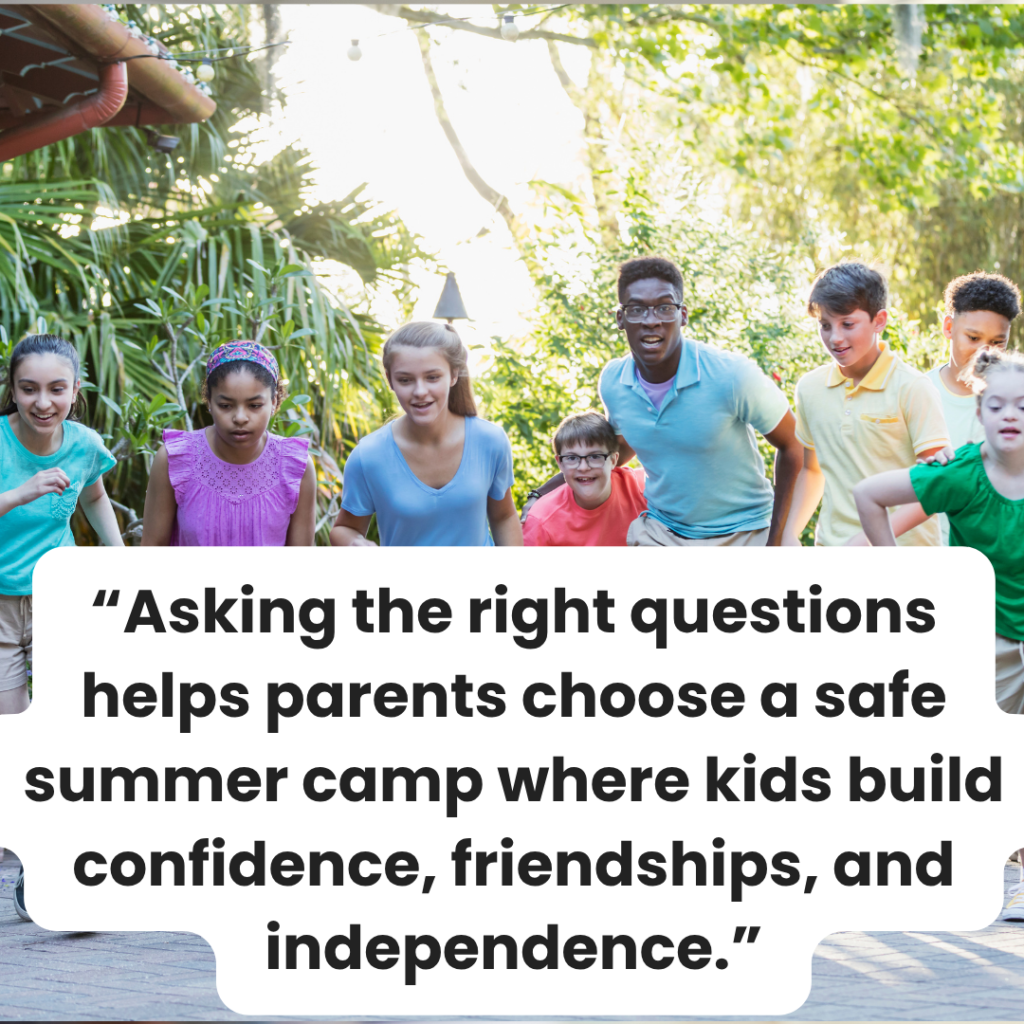
Choosing a summer camp is about more than filling time during the summer. It’s about giving your child an environment where they can explore new interests, build friendships, and grow in confidence.
When parents ask thoughtful questions, they move from guessing to understanding. Instead of hoping a camp will be a good fit, you can feel confident you’ve chosen an experience that aligns with your child’s personality, interests, and needs.
The best camps welcome these questions and are happy to answer them. After all, summer camp is a partnership between families and program staff. When communication starts early, it sets the stage for a positive and memorable summer.
Taking the time to ask these questions now can make all the difference later. Your child deserves a summer filled with fun, growth, and memories that last far beyond the final day of camp.
Leave a Reply
You must be logged in to post a comment.